


Which provides better protection, the stone guard or the motocross vest?
The stone guard is an assembly of padded panels that provides perfect back and chest protection. Its effectiveness is based on the stacking of layers that make up its two shells, enabling it to absorb shocks in the event of a fall or collision, but also to cushion all mud and stone projections, which are plentiful in motocross.
There are 2 sub-categories:
-
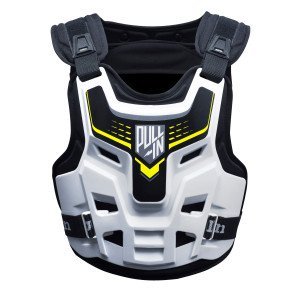
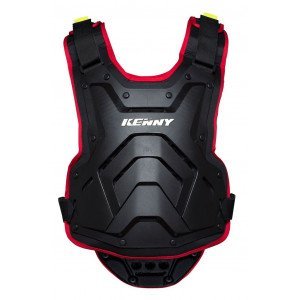
Lightweight stone guards without shoulder protection, such as PULLIN, KENNYPILOT, THOR MX GARDIAN and O'NEAL HOLESHOT CRANK :
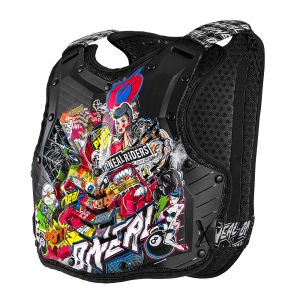
-
Stone guards with shoulder protection like these models O'NEAL PXR STONE SHIELD, LEATT 5.5 PRO, ALPINESTARS A10 FULL :
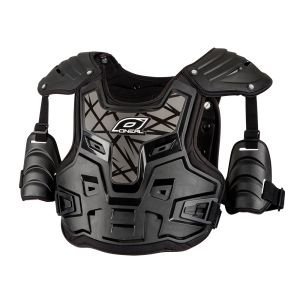
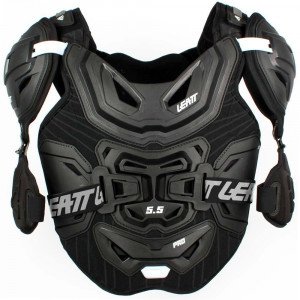
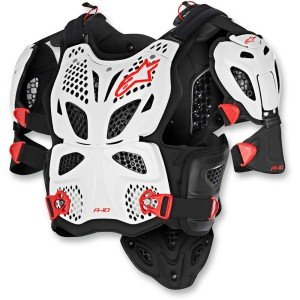
The motocross vest has the same protective function for the trunk, covering the chest and back, but its action is more extensive as it also covers the rest of the upper body. The included sleeves, elbow pads and shoulder pads provide effective protection for these areas, which are often exposed in accidents. The motocross vest acts more like a complete suit of armor.
There are several sub-categories here:
-
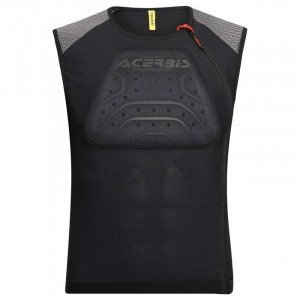
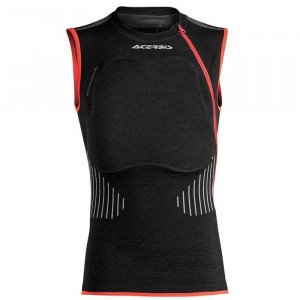
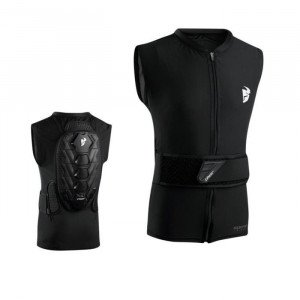
Sleeveless vests, such as ACERBIS X-AIR, ACERBIS X-FIT HALF PRO, THOR SENTRY RIDGE
-
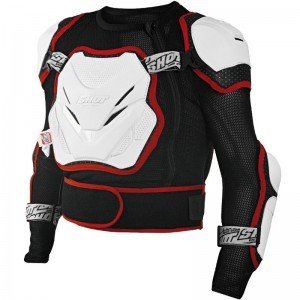
Full-body protective vests with plastic shells, such as: SHOT ANATOMIC, ACERBIS COSMO 2.0, ALPINESTARS BIONIC PRO
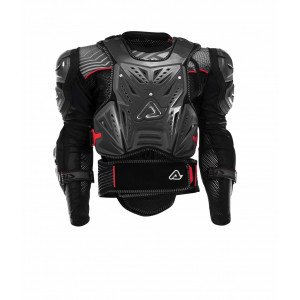
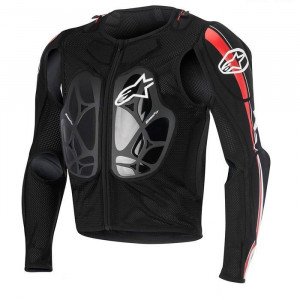
-
Integral protective vests with memory foam shells such as: ACERBIS X-FIT FUTURE, ALPINESTARS SEQUENCE, KENNYPERFORMANCE
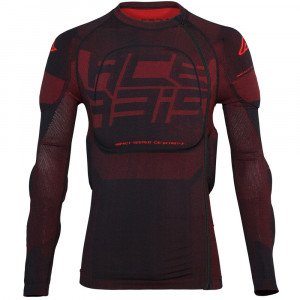
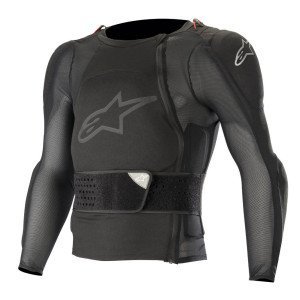
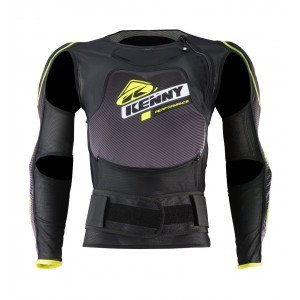
The comfort of the stone guard or the comfort of the protective vest?
The stone guard:
The stone guard is worn over the jersey, making it easier to put on and take off. Thanks to its rudimentary composition, it doesn't impede movement in any way.
The two shells are connected at the top by a system of straps, which you can choose to pad for maximum comfort. These straps are adjustable to suit all body shapes, giving the rider the sensation of wearing a tailor-made stone guard.
The shells of a stone guard are vented to allow air to circulate. Summer and winter alike, between perspiration and condensation, heat build-up - due to both climate and physical exertion - must be evacuated. For the most sophisticated stone guards, the foam itself is made of a material designed to ensure better ventilation.
Note that it is very uncomfortable, if not impossible, to wear a backpack with a stone guard.
The protective vest:
The motocross vest is considered far less comfortable by most riders, at least in its version with plastic shells. It's already less easy to put on, and the rider is inevitably more engrossed because of the sleeves included and because all the parts are linked. It fits under the jersey, and if it moves during training or racing, parts of it can irritate the skin directly. Finally, because of its more compact structure, the rider can feel oppressed and restricted in his movements.
To improve the comfort of the "ergonomic" protective vest and offer maximum and, above all, ultra-efficient protection, the biggest brands on the market, such as , ALPINESTARS, SHOT, LEATT and above all ACERBIS, now offer vests on which they have replaced the plastic shells with ultra-efficient absorption foam plates (with shape memory), making the whole thing ultra-ergonomic and comfortable! In this case, protection and comfort are optimal!
The motocross vest is perfectly compatible with the backpack.
Are there options for both?
Every rider has his or her own habits, and manufacturers have understood this by designing removable parts. In this way, each rider can adapt his or her equipment, taking into account not only the extent of protection, but also the comfort factor, which is not insignificant if you practice motocross assiduously and also compete.
Removable stone guard components:
For added safety, you can add removable parts such as shoulder pads. These attach to the shoulder straps of the stone guard, and can be adjusted at both shoulder and chest level to perfectly match the size of each rider.
Along with shoulder pads, elbow pads are the most common item added by riders, as elbows are such an exposed part of motocross riding. They are not attached to the shoulder straps, but stand on their own, either by being slipped on like sleeves, or with a stand-alone Velcro system.
You can also add arm guards that wrap around the biceps. These are connected to the shoulder straps and are adjustable.
An elastic lumbar belt can be added to reinforce the protection of the stone guard on the lower back. It is fastened by an adjustable buckle system to adapt to all body shapes.
The reason why all these added elements are adjustable is both for the rider's comfort and for his or her protection, because a part that doesn't stay in place at the time of a fall, shock or collision is of no use.
Finally, you can add silicone patches all over the stone guard to prevent it from slipping off your jersey while you're riding.
If you add all these elements, your stone guard will look like... a protective vest!
Removable protective vest components:
To make it easier to keep the vest in place, there's a system in which you put your thumb through the end of the sleeve. This eliminates the need for straps, which are not always easy to adjust and tend to impede blood circulation. You don't want numb fingers to help you steer with agility and precision.
The SHOT ANATOMIC vest is the perfect example:
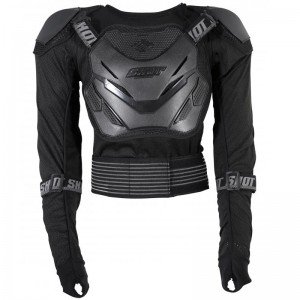
Hearing the argument that the vest is too bulky, manufacturers are offering vests with removable elbow and shoulder pads, so that the rider feels freer of movement.
The BIONICTECH from ALPINESTARS illustrates this possibility:
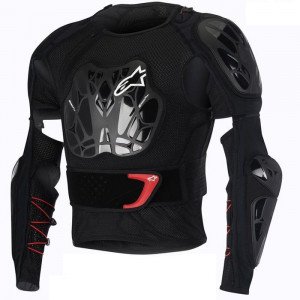
Like the LEATT PROTECTR 5.5 (white or black )The lumbar belt can also be removable. In this case, special care must be taken to ensure that it fits snugly and does not move on contact with the skin. Any discomfort it might cause can quickly become obsessive and distract the runner.
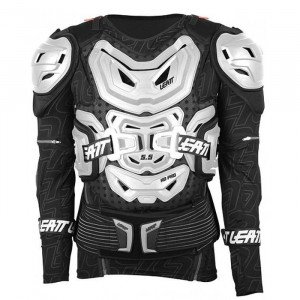
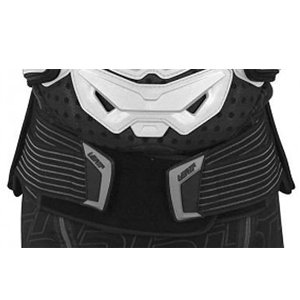
You can also add an abdominal protector that sits between you and the handlebars. It's very effective for protecting the stomach from impact, but not always very practical: it can get in the way when fastening your pants, and it impedes your pelvic mobility.
There are models with clip, Velcro and strap systems to improve various adjustments, but these considerably reduce comfort and agility.
Last but not least, you can add foam pieces that fit over the collarbones and run down the humerus. These are particularly appreciated when there are a lot of stone projections.
If you add all these options to your vest, you run the risk of not being able to move, and if you remove all the removable parts, your protective vest will look just like... a stone guard!
Maintenance of upper-body protection:
As stone guards are less complex, they are naturally easier to maintain. On some stone guards, the inner shells are removable, making cleaning even easier. A soft sponge and soapy water are all you need.
Similarly, a vest with removable parts is easier to clean, but still more complicated to maintain than a stone guard. You may be able to machine-wash part of it, but only if it's indicated on the label; otherwise, just use soapy water and a soft sponge.
For both, drying should be as natural as possible, preferably in an airy place. Never place your protective vest or stone guard directly on a heat source such as a radiator, in direct sunlight or in front of a stove. If you do, you risk them stiffening and becoming brittle, irreparably.
Price differences:
If you take the basic model, like the PULLIN or the THOR MX GUARDIAN, the stone guard is always cheaper than the vest, but if you add elbow and shoulder pads - the options most often preferred by riders - the prices of stone guards and ergonomic protective vests come close together. On the other hand, as soon as you move upmarket, price comparisons become irrelevant, as the effectiveness of protection cannot be quantified.
Special features and aesthetics:
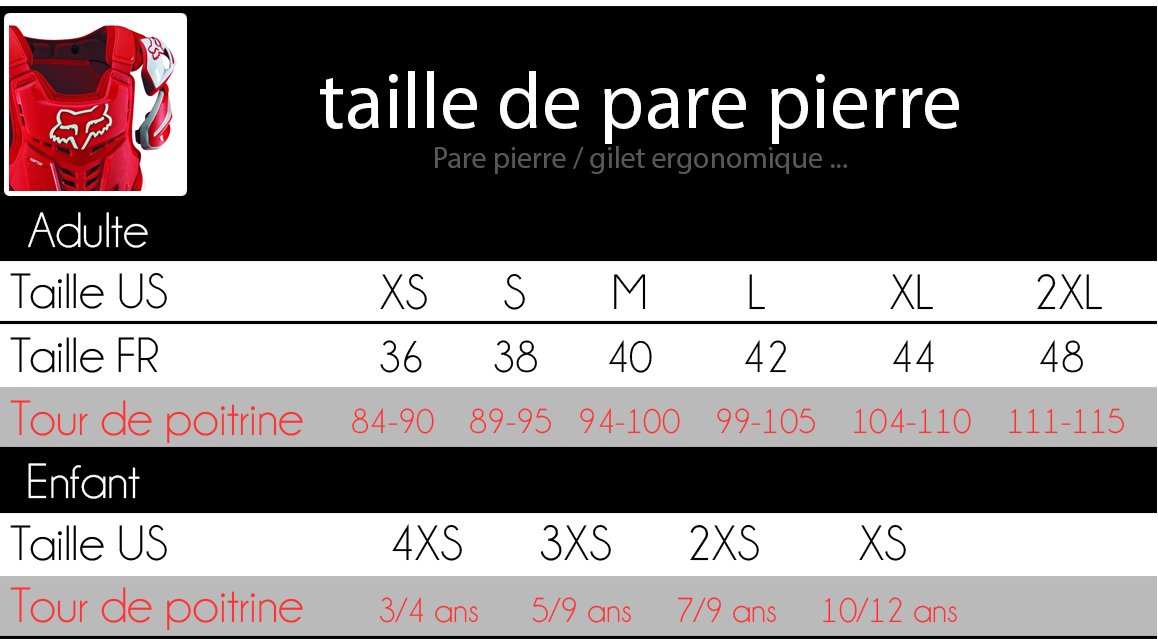
Stone guards and motocross protective vests come in all sizes, with variations to suit children of different ages and sizes. There are also models specifically designed for women. They take into account female morphology, with straps around the waist, shoulders and biceps, but especially around the chest to avoid excessive pressure.
Stone guards are often preferred for their aesthetic appeal. It takes up less space and weighs down the silhouette less. What's more, since it's worn over the jersey, it can be embellished with decorations, including brand logos if you have sponsors.
Inflatable stone guards:
Inflatable stone guards are now available. A little heavier but very comfortable despite its imposing silhouette, the inflatable stone guard generally surprises on first try. It fits naturally over the body and is perfectly suited to riding, even in very hot weather. When stationary, however, the heat quickly becomes unbearable.
Its effectiveness has been praised, both for splashes and for falls and collisions, and it's just as easy to maintain as a conventional stone guard.
Inflatable stone guards are permitted in some competitions, but not all.