



PARE PIERRE MOTOCROSS AND QUAD STONE GUARD FOR CHILDREN AND ADULTS









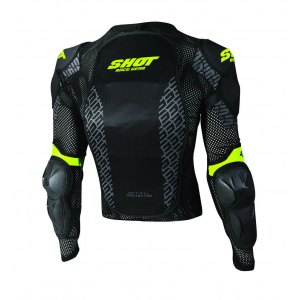


Pare pierre cross
What is a cross-country stone guard?
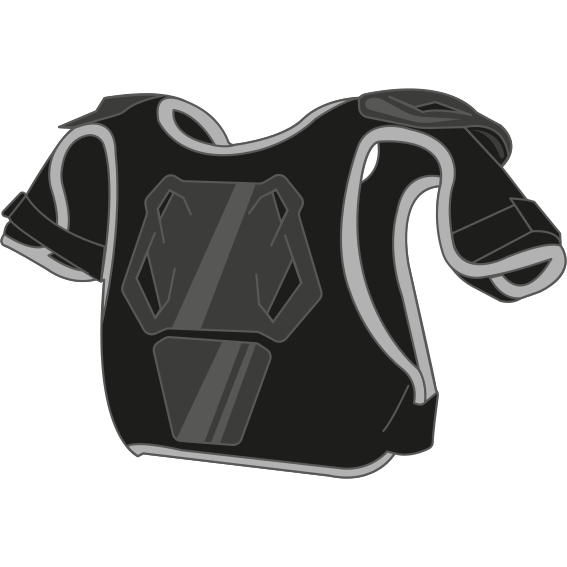
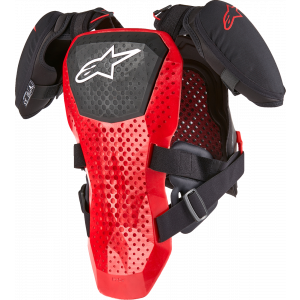
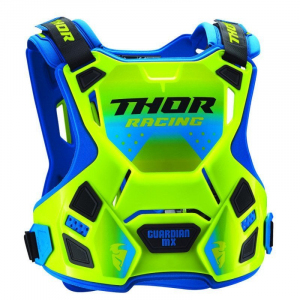
The stone guard is a protective device for the motocross rider's upper body, a must-have for all off-road enthusiasts and professionals on two wheels, whether cross-country or enduro. This protective gear for children and adults is made up of several protective panels and fits over the rider's motocross jersey. Its fastening system makes it easy to put on and take off.
The cross stone guard features padded panels on the back and chest. The shells are themselves made up of several layers to optimize shock absorption in the event of splashes, as well as in the event of a fall.
The panels of the motocross stone guard are held together and fastened to the enduro rider's upper body by shoulder straps, which must be padded for greater comfort. They must also be adjustable to suit all body shapes.
Depending on the model you choose, you have certain additional protections at your disposal:
- ∼ The stone guard can include protectors on the enduro rider's shoulders to enhance safety. The shoulder and chest adjustment system guarantees a customized fit. Shoulder plates can be removed.
- ∼S tone guards can be found with arm guards - often removable - that surround the biceps and are attached to the shoulder straps.
An elastic lumbar belt system and buckle system allow a customized fit for comfort as much as safety.
Silicone-printed logos are added to the entire stone guard to help keep the jersey in place.
To keep the jersey comfortable even in the hottest weather, the shells of the stone guard feature vents to improve air circulation and prevent heat build-up. The foam that makes up the shells of the stone guard can itself be aerated for better ventilation during exercise.
To facilitate maintenance of the enduro stone guard, the inner parts should be removable.
Stone guards are available for all sizes, including children.
That's why Tonnycat.com offers you..:
- Stone guards stone guards for adults
- Children's stone guards for children
You can also find special models for women. The shape of the chest protector is specially designed for the female morphology. The addition of straps ensures a better fit, mainly around the chest, but also around the waist, shoulders and biceps.
The inflatable stone guard
There's now an inflatable version of the stone guard on the market. It's a little heavier than its plastic counterparts, but it's very comfortable to wear because it fits naturally. The air gives it an ergonomic advantage, as well as making the interior more pleasant to the touch.
The inflatable stone guard comes with a suitable pump so you can inflate it very quickly.
The inflatable cross-country stone guard is often daunting at first, but one try is usually enough to convince them. It may look like a piece of equipment that restricts movement, but in practice, the rider is perfectly free and soon forgets all about it.
Care should be taken to ensure that the inflation valve is positioned correctly, so that it doesn't catch on any other part of the rider's equipment, such as the helmet's chin strap, for example. Similarly, the Velcro fasteners must be securely fastened so they don't catch on the jersey.
The inflatable stone guard for enduro bikes has been designed with sufficient ventilation so as not to be uncomfortable in hot weather. However, it quickly becomes unbearable when stationary.
The air acts as a perfect shock-absorber, both to protect against stone projections and in the event of a fall.
A good inflatable stone shield for motocross riding is strong enough not to puncture, and only requires a little pressure adjustment from time to time. In the event of a puncture, only the inner tubes need to be changed.
Nothing different from its plastic counterpart in terms of maintenance and cleaning.
The inflatable stone guard is permitted in some competitions, but not all.
Why have a cross-country stone guard?
Since it's unthinkable to ride a motocross bike without protective motocross equipment such as a motocross helmetmotocross motocross glovesgloves motocross goggles or a pair of motocross boots Whether you're a cross-country or enduro rider, upper-body protection is essential. The motocross stone guard, as its name suggests, is designed to protect you from stone projections, and of course any other projectiles you may encounter while motocross riding. It's also highly effective at absorbing impact in the event of a fall.
Protection focuses on the back and chest, and is the minimum required for any motocross outing. Ribs are also well protected.
What are its advantages and disadvantages?
Enduro stone guards are generally lightweight and comfortable to wear. It is easy to remove and put back on, provided you wear it over your jersey, which is usually the case. In this way, the motocross rider's personal protective gear doesn't impede his or her movements.
For those who value aesthetics, there's a wide choice of colors and patterns available from the various brands of motocross equipment to help you stand out, especially as the stone guard is clearly visible above the motocross jersey.
On the downside, the stone guard doesn't protect the elbows. For complete protection, you need to add elbow pads to your outfit. On the other hand, it's very uncomfortable, if not impossible, to wear a backpack with a stone guard.
Is it compulsory to have one in competition?
According to the paragraph on rider equipment in the general motocross regulations posted on the official FFM website, riders must wear approved back and chest protection during training sessions and races.
Here's the table of compulsory upper-body protection equipment for the French championships, broken down by category:
|
Discipline |
Type of chest/back protection |
|
Speed |
Dorsal protection mandatory / Inflatable protection authorized |
|
Dragster |
Back protection mandatory |
|
Track racing |
Back protector mandatory |
|
Trial |
Back protector mandatory / Chest protector recommended |
|
Enduro, TT endurance |
Chest protector and back protector mandatory |
|
Road rally |
Back protector mandatory / Inflatable protection authorized |
|
Motocross |
Chest and back protector mandatory |
|
Supermotard |
Back protector mandatory / Inflatable protection authorized |
|
Sand racing |
Chest and back protector mandatory |
What are the homologation standards for stone guards?
European standards generally apply in French competitions, but also for private use. Safety is just as important whether you're an amateur or a professional.
The various bodies responsible for competitions are increasingly aligning themselves with the legislation in force in the European Union.
As far as off-road riding is concerned, the two main bodies organizing sporting events are the FFM and the UFOLEP. Both now require riders to present their vests, chest protectors or stone guards to the stewards before the start of the competition. It is up to the stewards to approve or reject the protective equipment. Protective equipment must comply with the following standards:
- ⇒ Pectorale, standard EN 14021 or FFM Label
- ⇒D orsal, standard EN 1621-2, or Label FFM
- ⇒ Integral vest (integrated chest and back protector), EN 14021 standard for chest protector and EN 1621-2 standard for back protector, or FFM label.
These standards determine the minimum damping threshold of the reinforcement shells. The certification test consists of simulating a 50 joule impact. To obtain certification, energy transfer must not exceed an average of 35 kilonewtons for back protection, in accordance with standard EN 1621-2. For chest protection, energy transfer must be less than 27 kN for an impact of 10 joules, according to EN 14021, which is therefore less restrictive.
All EN 1621-2 and EN 14021-approved equipment carries a label certifying it by means of a pictogram representing a biker in a square and associating the number of each standard. This is proof that the shells concerned offer a sufficient level of cushioning to protect the motorcyclist.
Are there alternatives to stone guards?
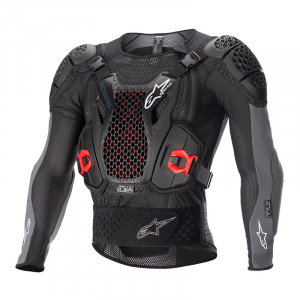
The alternative to the stone guard is the motocross protective vest. It's often less aesthetically pleasing than a stone guard, but provides comprehensive protection comparable to a suit of armor. Unlike enduro stone guards, elbow pads are included. Shoulder protectors are also attached to the motocross vest.
Some also include a support belt, which is extremely beneficial for lumbar comfort.
The main drawback of the protective vest is that it takes up much more space than the stone guard. Comfort is a matter for each rider to decide, and some have difficulty with the integrated elbow pads.
Weather conditions are also a factor, since with a protective vest, the rider is confined and feels the heat more strongly than with a stone guard.
It's perfectly compatible if you want to carry a backpack.
Protective vests are generally more expensive, but that's without taking into account elbow pads if you buy them in addition to stone guards.
In short, the protective vest provides better safety than the stone guard, but is less comfortable and much bulkier.
