


Buying a used motorcycle requires a number of checks to ensure that you are aware of all the sensitive points that could indicate a fault. Never rush at first sight, but take the time to inspect the machine, then try it out. Then check the papers, especially if you're buying from a private individual.
Where to find a used motorcycle
The Internet is a good place to start. Whether it's a private individual or a garage, you'll find a multitude of models on the sites. If you've already decided on a make or model, you can join Facebook groups or forums dedicated to that particular motorcycle and chat with some of its owners. This allows you to check that it's the right model for you.
This will give you a price range, and all you have to do is check the "argus" rating to see if the price is in line with the machine's value. Before you go to the site, it's a good idea to call your insurer, so that they can give you a price range for the contract. If you can afford the insurance, then you can call the individual or the garage to ask a few questions if everything is not specified in the ad, and make an appointment for the test drive.
Points to check
For the appointment, unless you're a mechanical whiz yourself, it's always advisable to come accompanied by someone more competent than you and with more experience of used motorcycles.
General condition
Start by checking the bike's general condition. Photos in advertisements are sometimes taken in poorly lit areas, or only from one side of the bike. Check for corrosion, if the bike has been ridden on roads that have been salted, or if it has slept outdoors for a long time.
Check the working order of the front and rear lights, as well as the indicators.
Check that all screws and bolts are in good condition. If the screws show signs of wear, the motorcycle has already had many breakdowns, which is not a good sign.
Finally, the motorcycle must not show any signs of having been dropped.
Starting the engine
Chances are, the owner will have started the motorcycle beforehand to make sure there are no misfires during your visit. Check that the motorcycle starts properly and that all the warning lights come on clearly.
The oil pressure and level light should go out instantly. When you turn the throttle, the engine should respond without delay, without the slightest suspicious rattle, and without letting out brown or black smoke. When the engine is cold, the curls remain white.

Tires
Tires must be observed very closely. They must match the description on the advert, and their tread pattern must comply with standards if they are to be roadworthy.
It's also a good idea to check the DOT number on the tire's sidewall. The first two digits indicate the week number and the last two, the year of manufacture. A motorcycle that hasn't been ridden much may have tires that are not very worn, but are too old and need to be replaced. Tires should not be more than 6 years old.
You'll find a selection of the best motocross tires at Tonnycat Racing.
Check for symmetrical wear on both sides of the tire. If there's an imbalance, the bike may have a fork or swingarm problem.
The battery
If the engine has shown the slightest hesitation when starting, it's imperative to access the battery to check it. You can also carry out the headlight test: switch on the ignition, without starting the engine, and go from code to headlight and from headlight to code. If you notice a slight delay in response, chances are the battery is nearing the end of its life. Then start the engine and switch on the headlights. When you accelerate, their intensity should change, proving that the alternator is charging the battery efficiently.
The battery should also be perfectly clean, with no whitish deposits on the casing or terminals.
The fork
The handlebars should turn smoothly from one stop to the other. If not, the bearings are damaged.
Then play with the fork, pressing it down and checking that it springs back up smoothly. There should be no traces of oil in the spigot seals.
Brakes
Check the brake assembly : lever, master cylinder and fluid reservoir. There should be no leaks or signs of repair. Brake pad linings should be present and visible. Check the pad thickness. The brake disc should be spotless, with no streaks.

The clutch
Clutch clearance should be approximately 5 mm. The cable tensioner should never be at its maximum. If the clutch is hydraulically operated, check that the lever operates smoothly. The clutch lever should automatically return to its initial position.
Gears
Gear shifting should be checked during the road test. However, if the motorcycle is on the center stand, it is possible to manipulate them with the engine off, by turning the rear wheel.
The chain
The chain must be in perfect condition, with the right tension to avoid damaging the sprocket pins. The teeth on the sprocket must not be worn.
Turn the rear wheel to check that no links are jammed.
Wheels and rims
Check for dents and turn the wheel to make sure it's not warped. It should be perfectly silent. If it's not, you could be facing a bearing problem. We offer you high-quality motocross rims!
Other checks
- Electrical system : check that all the controls work (lights and horn).
- Meter : check for signs of fogging, and any marks indicating that the meter has been dismantled.
- Frame and chassis : the motorcycle must be free of rust, scratched or redone paintwork, paint chips or dents on the fuel tank.
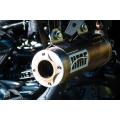
- Exhaust : there must be no traces of corrosion or scratches that would indicate a fall.
- Footrests : if they are scratched or bent, the bike has certainly been dropped.
Testing your used motorcycle
It's essential to take the bike for a test ride. It's always suspicious when an owner won't let you go for a ride.
Take the opportunity to check all the controls : clutch, brakes, gearbox, rapid deceleration and acceleration, angle of the handlebars when cornering, balance of the bike if you let go of your hands, etc.
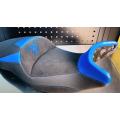
You also need to take comfort into account. Depending on your morphology, you may be in for some surprises, good or bad. If you try out the model of your dreams, but don't feel comfortable on it, it's best to consider another motorcycle.
Administrative documents
The seller must provide you with :
- vehicle registration document ;
- service book ;
- service manual ;
- maintenance invoices ;
- spare keys ;
- tool kit.