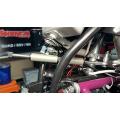



First and foremost, it's vital that your braking system is sound (clean components cleaned with brake cleaner, fluids bled less than a year old, brake pads in good condition, etc.).)
To increase efficiency without breaking the bank, there's nothing like good quality brake pads sintered metal brake pads, for example, combined with braided hoses (so-called aviation hoses): an excellent quality/price ratio without having to invest in heavy artillery.


If you want to take things to the next level, you can opt to replace your brake discs with a choice of materials and assemblies: semi-floating, floating.
Bear in mind that discs that have become conical over time, or rollback in the calipers, have a direct influence on the "slack" feel of the lever, and are in no way to blame.
You can also replace your calipers then master cylinder (BERINGER, FOR EXAMPLE) for maximum braking power and precision, while eliminating unpleasant parasitic syndromes in extreme conditions. Whichever option you choose, be careful with the brake fluid you use: some components are simply allergic to certain additives found in DOT5, which is aggressive to seals.
Make sure that the brake fluid you use is compatible with the master cylinder (this is usually indicated on the cap of the jar).
You can bleed your brake fluid yourself using this type of tool:

There are also repair kits for calipers and master cylinders which allow you to recondition old or damaged components with new seals.
For a better understanding, here's a video from our partner: