


Why and when to change your oil?
Changing the oil in your motorcycle is the most common form of basic maintenance, and you can do it yourself. Over time, your motor oil loses its properties and purity due to impurities brought in by the engine. As it becomes less viscous, it becomes less effective and no longer fulfils its role as an engine lubricant and cleaner.
To avoid damaging your engine, you need to change the oil regularly. The frequency depends on the type of motorcycle and the type of riding, which puts different demands on your engine. Oil changes take place every 5,000 to 12,000 kilometers. Some motorcyclists even go as low as 3,000 kilometers, especially those who ride mainly on racetracks.
TONNYCAT offers DRAIN PACKS for your machine!
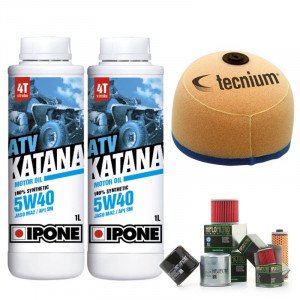
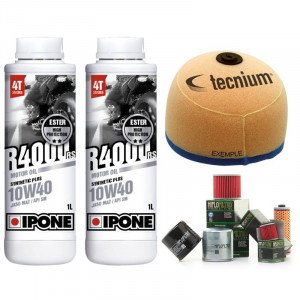
These PACKS can be made up of the oil recommended for your quad/motorbike or SSV and the oil filter + air filter.
We recommend replacing the oil filter at every oil change.
OIL CHANGE PACK FOR QUAD AND SSV
OIL CHANGE PACK FOR MOTORCYCLES
The essential tools for changing your own oil
Changing an engine's oil consists in changing the oil. You may also want to change the oil filter. Generally speaking, you change it every other oil change, but this again depends on the stress you put on your engine. Don't forget to note the mileage and whether or not you've changed the oil filter at each oil change.
To change your oil, you'll need tools and consumables, but no special knowledge of mechanics!
You'll need
A wrench to fit the drain plug you'll find under the crankcase (open-end or pipe wrench)
A container for collecting used oil. A fairly large container is handy. NEVER THROW YOUR USED OIL AWAY! Use a funnel to collect it from the container into a can, and dispose of it at a waste disposal site.

A collection bin for used oil, so you can easily take it to the waste disposal center.

A funnel to pour the oil into the crankcase.
You'll find a wide range of accessories to help you change your engine's oil here
Oils :
TONNYCAT offers you the best oils, and our two favorite brands are :

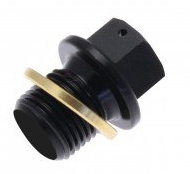
A gasket or drain plug may be necessary if the original gasket is not made of Teflon, aluminum or copper.
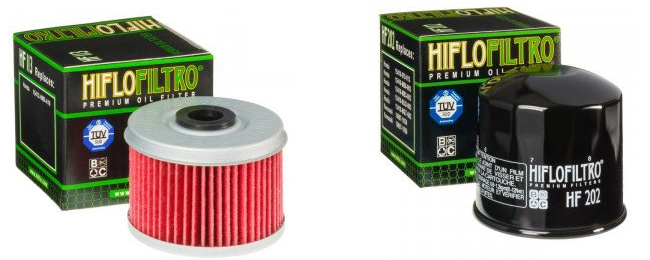
The best HI FLO FILTRO oil filters: discover the complete range here
Oil change steps
-
Warm up the engine for a few minutes to make the oil more fluid. This will not only make it more fluid, but also help loosen the particles on the crankcase walls that need cleaning. But don't overdo it, or you'll burn your fingers!
-
Switch off the engine and unclog the crankcase, which is usually located on the right-hand side of the motor.
-
Place your pan under the motorcycle's crankcase.
-
Loosen and remove the drain nut under the sump with your special wrench.
-
Allow the oil to drain completely into the pan.
-
Screw the drain nut back on with a new gasket.
-
Move the pan under the oil filter and remove the oil filter.
-
Allow the oil to drain to the end.
-
Refit the filter and screw it back on.
-
Fill the crankcase with new oil, using only the quantity recommended for your engine. This information is supplied by the manufacturer.
-
Allow the oil to stand for a few minutes, so that it distributes evenly in the crankcase.
-
Check the oil level and top up if necessary. If you've followed the manufacturer's recommendations, you shouldn't need to.
-
Wait and check again until the oil level is perfect.
-
Refill the sump and idle your engine for two or three minutes to build up the oil pressure.
-
You're now ready to drive to the waste disposal center to dispose of your used oil.
Video example of a Sherco oil change:
IMPORTANT:
Used oils contain many elements that are toxic to health and the environment: heavy metals, organic acids, phenols, phthalates, polycyclic aromatic hydrocarbons... They have a disastrous effect on flora and fauna. Don't throw them down the drain or into the environment. The waste disposal center takes care of their treatment, free of charge.