






-
-
-
-
-
-
-
- dcxtx2236
DAYCO ULTRA QUAD BELT for COMMANDER, RENEGADE, OUTLANDER 500/ 650/ 800/ 1000
€141.50
€130.19
- 11420241c
Performance belt for POLARIS SPORTSMAN 500 / 570 / 700 / 800 / 850 and RZR800
€65.90
€60.64
-
- dcxtx2236c
DAYCO XTX EXTRA-REINFORCED BELT for COMMANDER, RENEGADE, OUTLANDER MAVERICK 500/ 650/ 800/ 1000
€141.50
€130.19
-
-
-
-
-
BELT


THE ADVANTAGES OF BELT DRIVE :
- Belt drives are more flexible than chains or other transmission methods.
- Machine life is extended by absorbing load fluctuations.
- Belts are relatively quiet.
- Excellent protection against overloading and clogging.
- More efficient than other belts! 95-98% efficiency.
- The easiest to install and maintain.
- This method requires no lubricant.
- Total installation cost is significantly lower than other transmissions.
- Low maintenance costs
- Belt transmission is the most economical when the distance between the 2 shafts is large.
- No need for parallel shafts.
DISADVANTAGES OF BELT DRIVES :
- Non-repairable, must be replaced.
- Operating speed is limited.
- Belts have limited power transmission, increasing the heat generated during operation.
- Belt drives impose a heavy load on shafts and bearings.
- Possible damage from exposure to lubricants such as oil.
- Operating temperatures are limited to -35 to 85°C.
- Belt drives are not compact.
- Tension must be monitored!
- Speed ratio varies due to belt slippage and wear.
- The angular speed of belt drives is not constant.
- To compensate for wear and stretching, belts also need an idler pulley or center distance adjustment.
BELT LIFE :
This depends on several parameters:
- The number of people on the quad (with or without passenger) or in the SSV. An increase in the recommended load can prematurely tire the drive belt.
- Type of riding (sport, leisure, everyday). Aggressive driving in a race, for example, will wear the belt more quickly. In some competitions, drivers change belts for every race!
- Frequency of use. If the quad or ssv isn't used for a while, the belt can become brittle and dry out.
- Type of course (trial, fast, rolling). Some practices, such as trial riding, greatly reduce the belt's lifespan, as it is always under stress.
- Pulling a trailer or load, or helping a friend get stuck or bogged down! It all puts a strain on the belt!
- Using your quad or SSV with a snow plough can affect belt wear.
- The belt is made of ultra-strong rubber and is usually reinforced by an internal metal mesh, giving it rigidity and strength.
- A belt in good condition can withstand impressive tensile forces.
- The service life of an ULTRA-REINFORCED belt is around 10,000 km (according to the manufacturer's recommendations).
WHAT IS A TRAPEZOIDAL OR V-BELT?

This type of belt is the most widely used for power transmission. At equal tension, they transmit more power than flat belts, which is why they're used in variable-speed drives on quads and SSVs.
They offer the best combinations of
- traction
- speed
- bearing load
- service life
Their advantages:
- The "V" section of the belt follows a groove in the pulley, so the belt cannot slip, so it greatly improves torque transmission.
- It needs less tensioning thanks to its structure.
- The optimum speed range is greater than other belt types.
- For high-power requirements, two or more V-belts can be assembled side by side, in an arrangement known as a "multiple-belt drive".
V-belts are basically made of rubber or polymer. Fibers may be incorporated into the rubber or polymer to increase strength:
- textile material
- polyamide
- polyester
- steel
- aramid
- Kevlar
SELECTION CRITERIA :
The type of belt to be used depends on the type of application, and should therefore be selected according to :
- Torque to be transmitted
- Speed of rotation
- Centre distance
- Reduction ratio
- Temperature and lubrication conditions
HOW TO CHANGE A BELT :

Specific tools are required. However, this operation is rather difficult for the uninitiated
First, dismantle the variator located under the transmission housing. Beware of flanges, springs and centrifugal weights that may fall out.
On reassembly, you'll need to recompress the clutch, which is responsible for tensioning the belt, while the variator is responsible for changing the transmission ratio.
At rest, the belt is at the top of the variator flanges, and as you increase speed, the flanges move apart and the belt drops down, reducing the transmission ratio, a bit like changing gear ratios from 1st to 5th.
Once the new belt has been installed, the weights, springs, variator outer flange, variator nut and housing must be removed.
There are a number of tools available to help you dismantle and install your belt:
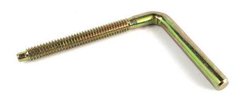
For POLARIS RZR 1000 TURBO :
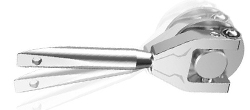
For the CAN AM MAVERICK X3 :
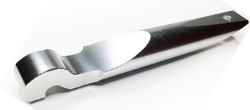
For POLARIS RZR 1000 XP / RZR XP4 / RZR S 900
KEEP A CLOSE EYE ON YOUR BELT TEMPERATURE:
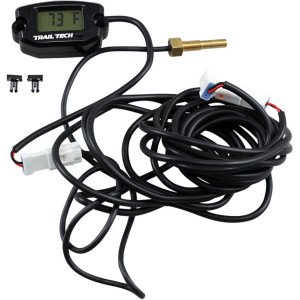
TRAIL TECH TTO offers an excellent CVT digital belt temperature sensor:
The TTO Digital Temperature Gauge lets you easily monitor your belt temperature on all applications that incorporate a CVT-type transmission. 30-500 ° F (0-270 ° C)
Easy-to-read LCD display and ultra-slim design.
Kit comes complete with TTO temperature gauge, temperature probe and its sensor extension for simple installation.
Temperature range: ° F / ° C
supplied with 3.00 m extension lead
MANUFACTURER'S WARRANTY ON BELTS :

The limited warranty on the belt covers any defect in material or workmanship under normal conditions of use during the warranty period. The warranty period for belts, proven to be defective due to improper materials or workmanship, purchased from the manufacturer is as follows
The warranty is valid for 1 year from the date of purchase only if installation has been carried out by a professional.
This is a parts warranty and will not cover any labor involved in repair or replacement.
This limited warranty does not cover any problems caused by conditions, malfunctions or damage not resulting from defects in materials or workmanship.
In no event shall Seller be liable for any other costs or damages, such as indirect, incidental, punitive, special or consequential damages, or lost profits, lost revenues or recall costs.
G-BOOST TECHNOLOGY!
We offer several brands of belts, but we clearly recommend G-BOOST
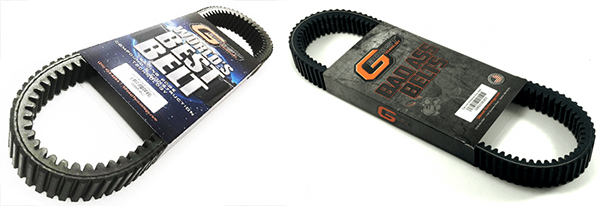

The structure of this reinforced belt is made of ultra-strong aramid fiber, which can withstand/carry over 10,000 pounds of tension without stretching or breaking.
Its strength is far superior to that of original and aftermarket drive belts.
Bad Ass model belts have been developed with a high-temperature compound called DUMAX for added strength, flexibility and heat resistance, which means you can tighten these G-BOOST BAD ASS belts much tighter for more adjustability and less slippage.
Maximum rigidity under the cord allows the belt to flex for spinning efficiency and cooler temperatures.
This product is designed for high temperatures, extreme abuse and excessive shock.
